
Key Takeaways
- Tummy tuck scars are permanent but typically fade from red and raised to flat, pale lines within 12 to 18 months with proper care. Expect the most noticeable changes after the first few weeks, when scars often look their worst.
- Scar quality depends on three main factors: surgical technique, your individual biology, and how closely you follow aftercare instructions.
- Proven first-line treatments include silicone gel sheets, sun protection, and gentle scar massage. Follow your scar management protocol consistently before considering laser treatments or revision surgery.
- Mini tummy tuck procedures still leave scars, but they are typically shorter and easier to hide than full abdominoplasty scars.
- The final appearance of your scar is influenced by surgical technique, incision placement, and your individual healing capacity.
Tummy Tuck Scars Are Inevitable, but Can Be Softened
Any tummy tuck or abdominoplasty will create scars where skin was cut and tightened. As of 2026, scar-free abdominoplasty does not exist. When surgeons remove excess skin and fat from your lower abdomen, incisions are unavoidable, and incisions leave marks.
This visible scarring is the trade-off for removing loose skin after pregnancies, bariatric surgery, or significant weight loss. You are exchanging redundant skin folds for a dramatically contoured silhouette with improved core strength.
The reassuring reality? In most patients, tummy tuck scars are placed low on the abdomen, near the pubic area, to aid concealment. These scars usually fade from red and obvious to flatter, paler lines that sit low enough to be hidden by underwear or swimwear. Over 90% of patients report their scars are concealable under standard clothing.
This article outlines what to expect from abdominoplasty scars month by month, and the best evidence-based strategies to minimise their visibility.

Understanding Tummy Tuck Scars: What to Expect
Standard tummy tuck procedures typically result in three potential scars: a horizontal lower abdominal scar extending from hip to hip (typically 20 to 30 cm), a scar around the repositioned belly button, and, in some cases, a vertical midline scar for fleur-de-lis techniques.
Scar appearance varies significantly based on individual factors. Younger skin with higher elastin content rebounds better, producing thinner scars. Darker skin types (Fitzpatrick IV-VI) may experience prolonged pigmentation due to higher melanocyte activity.
What Influences Your Scar Tissue Formation
Your age and skin elasticity play a significant role, with younger skin producing thinner, less prominent scars. Ethnicity is also a factor, as African and Asian ancestries carry 5 to 15 times greater keloid risk. Smokers face 50% higher complication rates, making smoking cessation before surgery one of the most impactful steps you can take. A personal history of hypertrophic scars or keloid formation is worth discussing openly at your consultation, as is the surgical technique itself, including incision placement and tension management.
Normal Scar Evolution
Scars follow a predictable colour progression from red and pink through to pale, and a texture shift from raised to flat. With proper tension-free closure, most scars stabilise to under 2 to 3 mm in width over time.
Hypertrophic scars affect 10 to 15% of cases, appearing as firm, raised scars that stay within the incision boundaries. Keloids, which extend beyond the original wound, are rarer at 1 to 2%.
Mini vs Full vs Extended Tummy Tuck: How Technique Affects Scarring
The type of procedure you undergo directly impacts your scar burden. Each surgical technique serves different needs and produces different scar patterns.
Mini Tummy Tuck
Mini-abdominoplasty usually results in a shorter horizontal scar without the umbilical scar. The scar typically measures 4 to 8 inches, positioned below the navel. Benefits include 50% less scar length and quicker recovery, but this approach only suits isolated lower abdominal laxity.
Full Tummy Tuck
A full tummy tuck involves the standard hip-to-hip incision (6 to 12 inches) plus a circumumbilical scar to reposition your navel. This approach enables tightening of the abdominal muscles through rectus muscle plication for diastasis correction, but increases overall scar burden.
Extended and Fleur-de-Lis Abdominoplasty
Extended versions incorporate flank extensions for post-bariatric circumferential tightening. The Fleur-de-Lis technique combines vertical and horizontal incisions, suitable for patients with significant excess skin. These procedures prioritise contour improvement over minimal scarring.
Combined procedures such as tummy tuck with liposuction add only negligible 4 to 5 mm access points, not significantly impacting the primary scar. Tummy tucks are also frequently performed alongside breast surgery as part of a mummy makeover, and careful planning helps minimise scarring across both areas.
Scar Placement and Concealment: Setting Realistic Expectations
Experienced surgical teams place the horizontal incision just above the pubic area, typically 5 to 7 cm above the vulvar commissure, curving gently to mimic the inguinal ligament. This positioning ensures approximately 95% concealability under modern bikini styles and standard underwear.
Key placement principles:
- Tummy tuck incisions follow natural skin tension lines
- Internal quilting sutures reduce shear forces that can widen scars by 2 to 3 times
- Incisions curve toward the hip bone rather than cutting straight across
Bringing your preferred underwear or swimwear to your pre-operative consultation allows your surgeon to personalise placement around your clothing choices.
One important point to set expectations clearly: a completely invisible scar is not a realistic goal. The focus should be a subtle, flat, and easily concealed line, not total invisibility, which is simply not how wound healing works.
Tummy Tuck Scar Healing Stages and Timeline
Scar maturation takes 12 to 24 months. Understanding this process helps set realistic expectations and reduces anxiety during recovery.
What most patients experience:
- 0 to 2 weeks (immediately post-surgery): Scars appear red, slightly swollen, and may have some drainage. Sutures are typically removed during this window. The incision site carries a 1 to 5% risk of wound separation (dehiscence).
- 2 to 6 weeks (initial healing): Scars may appear red, firm, raised, and possibly swollen. Itchiness from nerve regeneration is common. Dissolvable sutures may “spit” in 10 to 20% of cases.
- 6 weeks to 6 months (maturation phase): Scars begin to fade from red to pink as collagen remodelling occurs beneath the skin surface. Temporary thickening is normal.
- 6 to 18 months (final maturation): Scars become soft, pale lines as collagen type III yields to type I.
Healing is not linear. Many patients report their scars looking worst around three months due to collagen buildup before improving again. Darker skin tones may see prolonged pigmentation continuing into the second year.
Early Scar Care: The First 6 Weeks After Surgery
The opening weeks of recovery focus primarily on safe wound healing, avoiding infection, wound separation, and excess tension. This foundation directly influences your final appearance.
Core Early-Phase Care Instructions
In the first six weeks, keep incisions clean and dry and avoid picking at scabs or healing tissues. Wear compression garments at 20 to 30 mmHg to minimise seroma risk, and avoid heavy lifting, stretching, or submersion in water until your surgeon clears you.
Topical treatments such as silicone sheets and scar creams should normally start only after the incision is fully closed and cleared by your surgeon, usually around 2 to 3 weeks post-surgery.
Red-Flag Signs Requiring Urgent Medical Review
Contact your surgical team immediately if you notice spreading redness beyond 2 cm from the incision, warmth, pus, or increasing pain. A wound opening greater than 1 cm or a fever above 38.5 degrees Celsius also requires urgent assessment.
Unmanaged complications can result in scars that are four times wider due to granulation overload. Early intervention protects your recovery.
Supporting Long-Term Scar Healing (6 Weeks to 18 Months)
Once incisions are fully closed, focus shifts from wound protection to guided scar modulation. Proper postoperative care, including sun protection and nutrition, significantly affects the final outcome.
At-home measures for optimal healing:
- Daily moisturising with hypoallergenic emollients
- Gentle scar massage from approximately 4 to 6 weeks
- Avoid strong friction from tight waistbands directly on the scar
UV exposure can cause 50 to 100% darker pigmentation through tyrosinase upregulation, and this darkening can be permanent. Use broad-spectrum SPF 50 on the scar area for at least 12 months post-surgery.
To promote healing, maintain a stable weight, follow a balanced diet, and completely avoid smoking or vaping during recovery.
Ready to explore your options? View our full range of body surgery procedures or contact our team to arrange a consultation.
Proven Scar Treatments: Silicone, Massage and Topicals
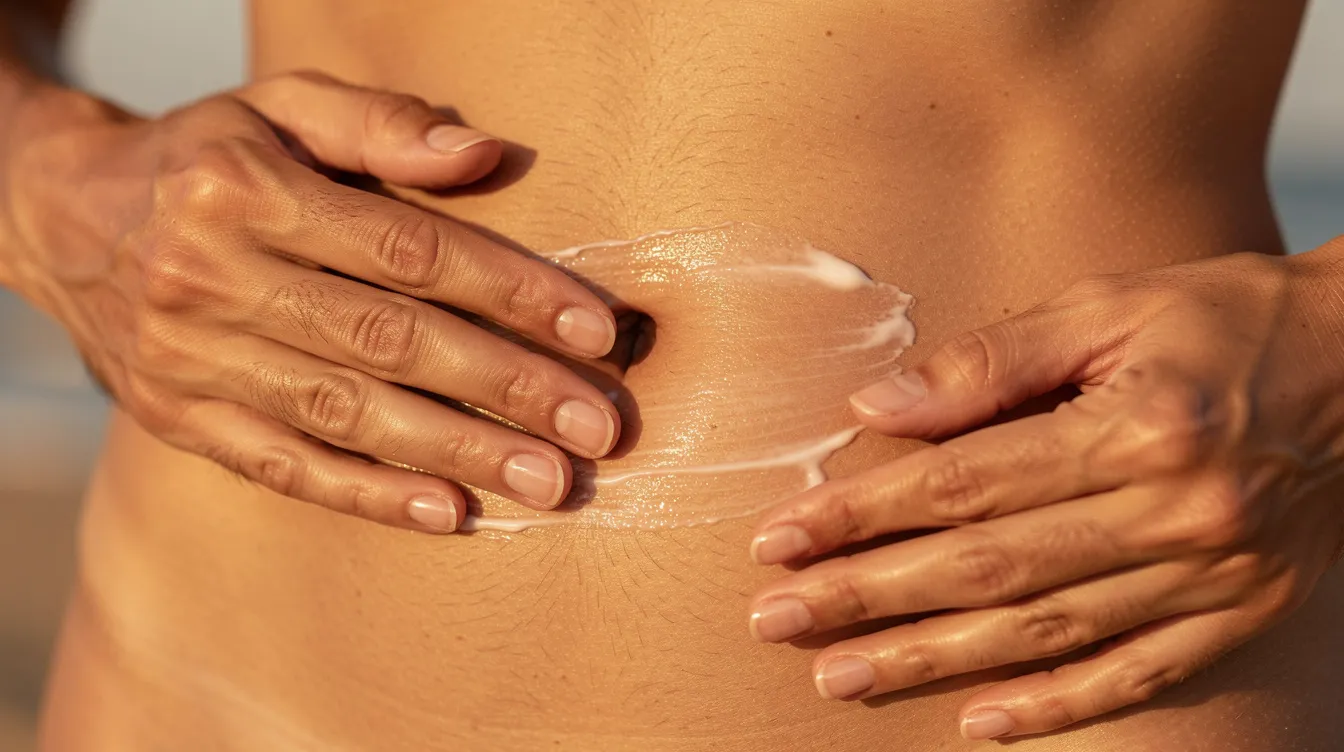
So you may be asking, what is the most effective at-home treatment for tummy tuck scars? Silicone therapy is consistently the gold standard, with meta-analyses of 20 randomised trials showing 67 to 86% improvement in scar height and colour versus controls.
How silicone gel sheets work:
- Hydrate the stratum corneum
- Reduce transepidermal water loss
- Modulate fibroblast activity to prevent excessive collagen deposition
- Compress scar tissue and reduce scar thickness
Practical usage guidance:
- Start once the skin surface has healed, usually 2 to 3 weeks post-op
- Begin with shorter wear times to check for skin sensitivity
- Progress to 12 to 24 hours of daily wear
- Continue consistently for at least 3 months
Gentle scar massage, typically starting 4 to 6 weeks post-surgery, helps break down excess collagen and promotes a softer, flatter result. Apply firm but not painful pressure for 5 to 10 minutes twice daily.
Onion extract gels offer only marginal 10 to 20% benefit and irritate approximately 15% of users. Vitamin E creams irritated 33% of scars in a 1999 Dermatologic Surgery study without demonstrable benefit. Use topical treatments only if specifically recommended by your surgeon.
Advanced Options: When Scars Need Extra Help
Most tummy tuck scars improve well with time and basic care. However, 5 to 10% of patients with raised, wide, or very red scars may benefit from professional treatment.
Non-surgical options:
- Pulsed dye laser (585 to 595 nm): Targets haemoglobin; four sessions reduce redness by 50 to 70%. Can start from 3 to 4 weeks post-op.
- Fractional CO2 laser: Resurfaces 20 to 50% of texture issues post-3 months.
- Microneedling (1.5 mm depth): Creates controlled micro-injuries to stimulate collagen production, improving texture and pigmentation of mature scars.
- Steroid injections (triamcinolone 10 to 40 mg/ml): Sessions every 4 to 6 weeks flatten 60 to 80% of hypertrophic cases.
Surgical scar revision:
Revision is typically considered 12 to 18 months after the original operation, once scars have fully matured. Operating too early risks over-correction or repeat widening. Revision can excise 20 to 50% of scar length under local anaesthesia, with 80% patient satisfaction, though 10% recurrence rates exist in keloid-prone individuals.
Lifestyle Factors That Influence Tummy Tuck Scar Healing
Your daily habits significantly impact scar formation and proper healing during tummy tuck recovery.
Nutrition for healing:
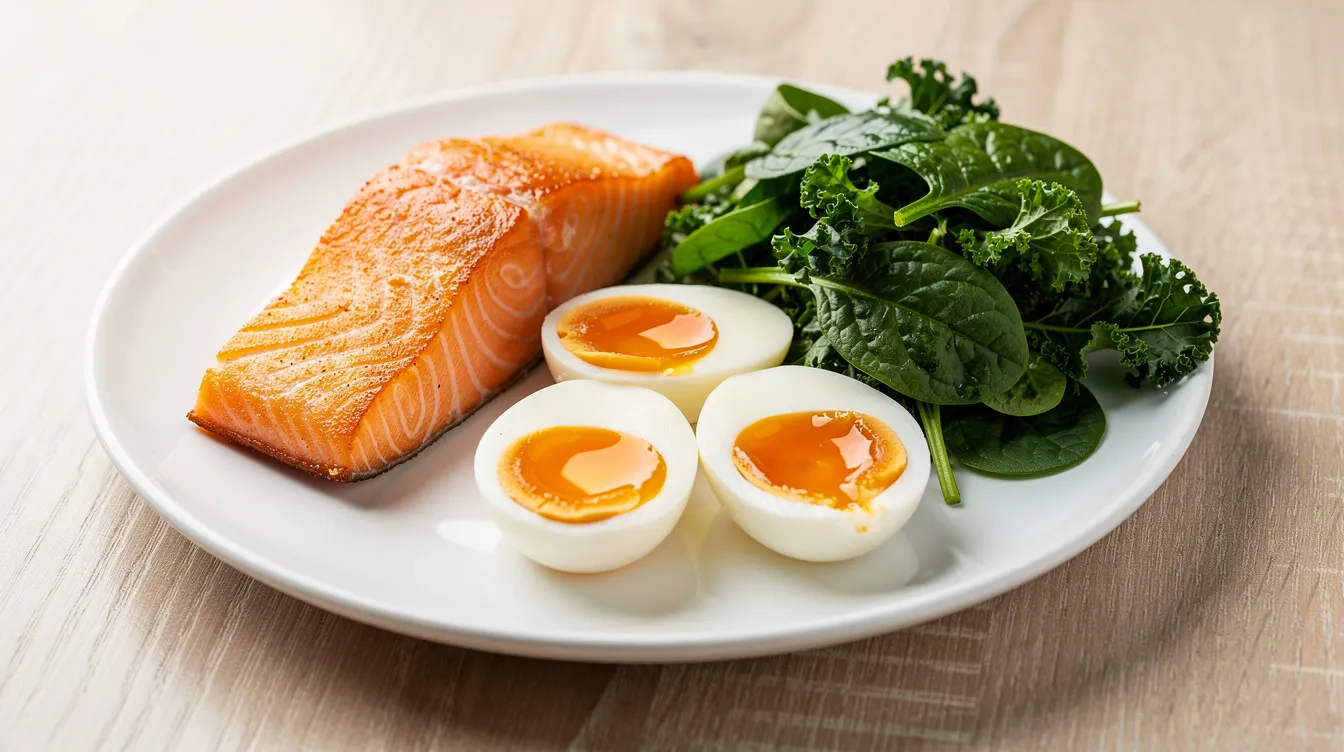
Healthy nutrition is a cornerstone of tummy tuck recovery. Adequate protein and vitamins A, C, and E are especially important to support tissue repair post-surgery. Specific recommendations:
- Protein: 1.2 to 2g per kg bodyweight (yields 15 to 25% faster tensile strength)
- Vitamin C: 500mg twice daily (cofactor for collagen hydroxylation)
- Zinc: 15-30mg daily (supports metalloproteinases)
- Hydration: 1.5 to 2 litres water daily
Critical lifestyle factors:
- Avoiding smoking is essential as it severely impairs blood flow and healing, potentially leading to thicker scars. Nicotine halves perfusion and doubles hypertrophy odds.
- Maintain stable weight to prevent scar stretching on surrounding skin
- Control blood glucose if diabetic (target < 140mg/dl halves infection risk)
Return to exercise gradually as cleared by your surgeon. Start with gentle walking at 4 to 6 weeks to stimulate blood flow without straining the incision line. Full exercise typically resumes at 12 weeks.
When to Contact Your Surgeon About Your Scar
Warning signs that tummy tuck scar healing is not progressing normally:
- Sudden widening beyond 5mm
- Raised, rope-like tissue developing
- Severe itching persisting beyond 3 months
- Significant asymmetry greater than 1cm
- A noticeable scar that continues worsening rather than improving
Early intervention with professional scar treatments often produces better outcomes than waiting several years with a problematic scar. If your scar still looks very red, lumpy, or uncomfortable after 6-9 months despite good care, schedule a review to discuss options like silicone sheets, steroid injections, or laser therapy.
The difference between normal healing and infection matters: early redness and firmness are expected, but increasing pain, heat, pus, or fever need immediate assessment.
FAQ: Tummy Tuck Scars and Minimising Them
Will a mini tummy tuck leave less visible scarring than a full tummy tuck?
A mini tummy tuck typically involves a shorter, lower horizontal scar and no belly-button scar, resulting in less overall scar length to heal. However, visibility still depends on skin type, healing biology, and aftercare. A short scar can still become raised or dark if poorly managed. Mini tummy tucks suit only patients whose excess skin is confined below the navel. Choosing a mini procedure when a full tuck is clinically needed compromises your result, not just scar quality.
How soon after my tummy tuck can I start using silicone gel sheets?
Most surgeons recommend starting silicone gel or sheets once the incision is fully closed with no scabs, usually around 2 to 3 weeks after surgery. Always confirm timing at a follow-up appointment, as healing speed varies. Begin with shorter wear times to check for skin sensitivity before progressing to 12 to 24 hours daily. Silicone therapy is most effective when used consistently for several months rather than sporadically.
Can I completely avoid a visible tummy tuck scar with good care?
No current technique or product can eliminate tummy tuck scars entirely. The goal is a less noticeable scar, a fine, flat, pale line that blends with surrounding skin. Genetics play a major role in scar behaviour, so some patients with excellent aftercare still develop more prominent scars. Choosing a skilled surgeon and following your post-operative instructions gives you the best possible outcome, but a faint line will remain.
Is it safe to tan or use sunbeds while my tummy tuck scar is healing?
Direct sun or sunbed exposure on healing scars should be avoided for at least the first 12 months due to a high risk of permanent darkening. Use physical protection (high-rise swimwear, clothing) and broad-spectrum SPF 30 to 50 if your lower abdomen might be exposed. Fake tans and bronzing products should stay off the scar area until your surgeon confirms the skin barrier is fully intact.
When is the earliest I should consider scar revision surgery after a tummy tuck?
Most surgeons prefer to wait 12 to 18 months before offering surgical scar revision, as scars from tummy tuck procedures typically take this long to mature. Operating too early, while tissues are still changing, can lead to over-correction or repeat widening. Discuss non-surgical options first if you are within the first year of healing.
Take the Next Step
If you are considering abdominoplasty and want to understand what your recovery and results could look like, our team at Sunion Health is here to help. Book a consultation today or explore our body surgery procedures.
Resources
The following UK resources provide reliable, independent information on cosmetic surgery, scarring, and patient safety:
- British Association of Aesthetic Plastic Surgeons (BAAPS) — baaps.org.uk: The UK’s leading professional body for aesthetic plastic surgeons, with patient guides covering procedures, risks, and choosing a surgeon.
- NHS: Cosmetic Surgery — nhs.uk/conditions/cosmetic-procedures: NHS guidance on cosmetic procedures, what to expect, and how to find safe, regulated treatment.
- Care Quality Commission (CQC) — cqc.org.uk: The independent regulator of health and social care in England. Use the provider search to verify that any clinic you consider is registered and rated.
- British Association of Plastic, Reconstructive and Aesthetic Surgeons (BAPRAS) — bapras.org.uk: A professional association for plastic surgeons in the UK, with patient information and a surgeon finder tool.
- Scar Free Foundation — scarfree.org.uk: A UK charity funding research into scar-free healing, with accessible information on scar types, treatments, and wound management.


